When Every Argument Feels Like the Same Argument
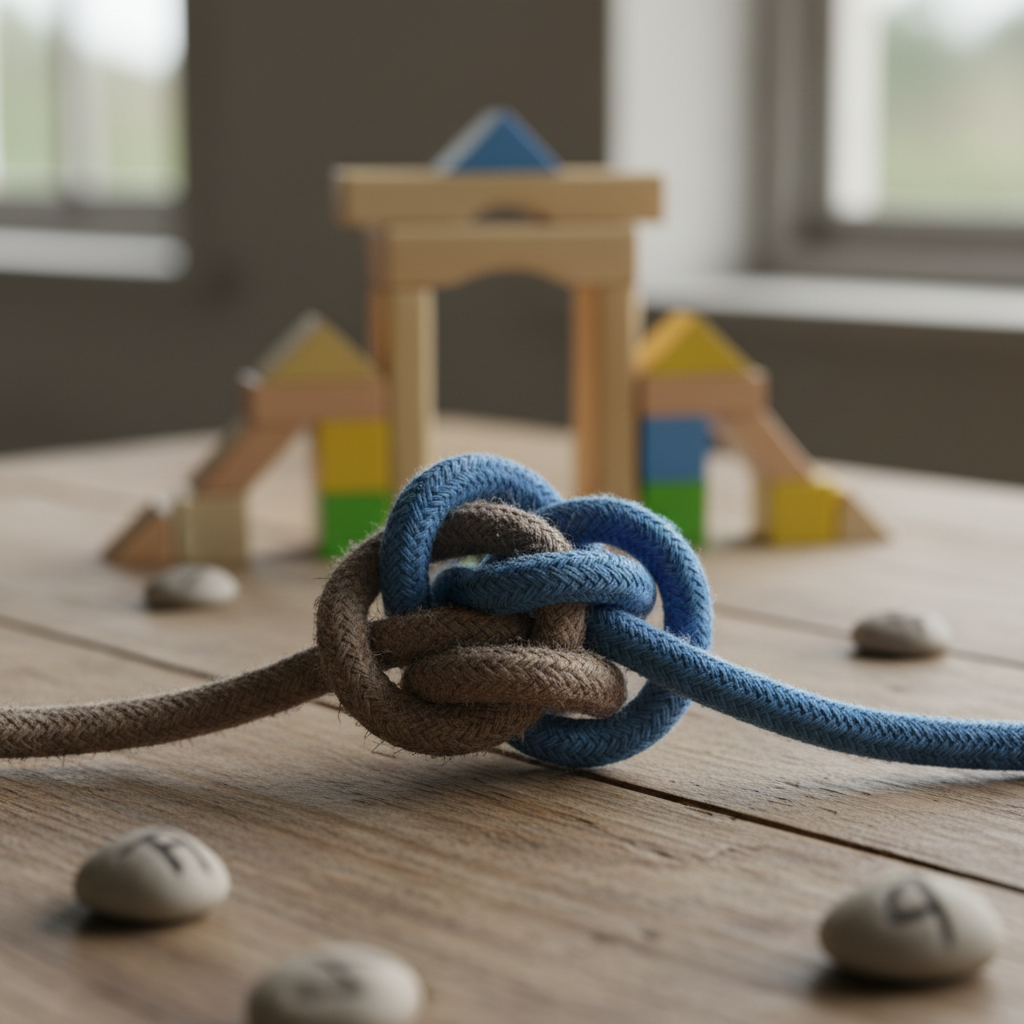
When Old Arguments Never Really End
It can start with something completely trivial. The way the dishwasher is loaded, a forgotten item on the shopping list, or being five minutes late.
But before you know it, you’re not talking about the dishes anymore. You’re back in that argument you had six months ago. Or the one from last year. Suddenly, the air is thick with old hurts, past disappointments and all the things that were never fully resolved.
One of you might retreat, shutting down to avoid another blow-up. The other might push harder, desperate to finally be heard and understood. It’s a painful, exhausting dance you’ve done many times before. You both know the steps by heart, and you both know where it ends: with distance, silence and a deep sense of hopelessness.
You might even try to fix it later with a quick, “Sorry, I was tired,” but you both know the issue hasn't gone away. It’s just been put back in its box, waiting for the next time.
The Weight of Unresolved Conflict
Old disagreements don't just disappear because we stop talking about them. Instead, they leave behind an emotional residue. Think of it as a backlog of unheard feelings and unmet needs. When a new, smaller conflict arises, it triggers that backlog, and all the old emotions come rushing out with it.
This is why a simple discussion can feel so disproportionately huge. It’s not just about who takes the bins out; it’s about feeling unappreciated. It’s not just about a change of plans; it’s about a deeper fear of not being a priority.
Over time, this pattern of unresolved conflict erodes the foundations of a relationship. It chips away at trust, creates emotional distance, and makes genuine connection feel risky. It can feel like one person is doing all the emotional work just to keep the peace, while the underlying problems just continue to simmer.
You stop bringing things up because it feels easier than facing the inevitable, repetitive argument. But the silence that follows isn’t peaceful; it’s heavy with unspoken tension.
Why ‘Moving On’ Isn't Always the Answer
Couples often tell us they’ve tried to “draw a line under it” and move on. While the intention is good, it rarely works when the original issue hasn't been properly heard and understood by both people. You can’t build a strong future on a foundation that still has cracks in it.
When we repeatedly brush things under the carpet, we create a landscape where it’s difficult to have any kind of difficult conversation without it escalating. Every potential disagreement becomes a threat. You start to second-guess yourself, wondering if it’s even worth mentioning what you feel.
This is often when one person stops opening up in a relationship. They withdraw, not out of malice, but out of self-preservation. It just feels safer to keep things inside than to risk another round of the same old fight.
A Different Kind of Conversation
So, how do you break the cycle? How do you have a conversation about a past hurt without it hijacking your present? This is where relationship therapy offers a new way forward.
It’s not about finding who is right and who is wrong. It’s about creating a structured space where you can both slow down and finally listen to what’s going on underneath the words. It’s a place to understand the pattern, not just re-enact it.
A therapist acts as a neutral guide, helping you both to say what you need to say in a way that the other person can actually hear. They can help you untangle the present-day issue from the baggage of the past.
What Does This Look Like in Practice?
In a session, we might help you map out one of your repetitive arguments. We look at the triggers, the automatic reactions, and the painful emotions that each of you experiences. By seeing the cycle from the outside, you can start to see it as the enemy – not each other.
We work on couples communication, but not in a rigid, textbook way. It’s about learning to speak your truth without accusation and learning to listen for the feeling behind your partner’s complaint.
For many couples across Kent, this process is a huge relief. It’s the first time they’ve been able to talk about ‘that thing’ without the conversation exploding. It’s a chance to feel like a team again, tackling a problem together.
Ready to Break the Cycle?
If you feel stuck in a loop of the same old arguments, you don’t have to keep trying to solve it alone. It’s not a sign of failure to ask for help; it