Feeling More Like Flatmates Than Partners?
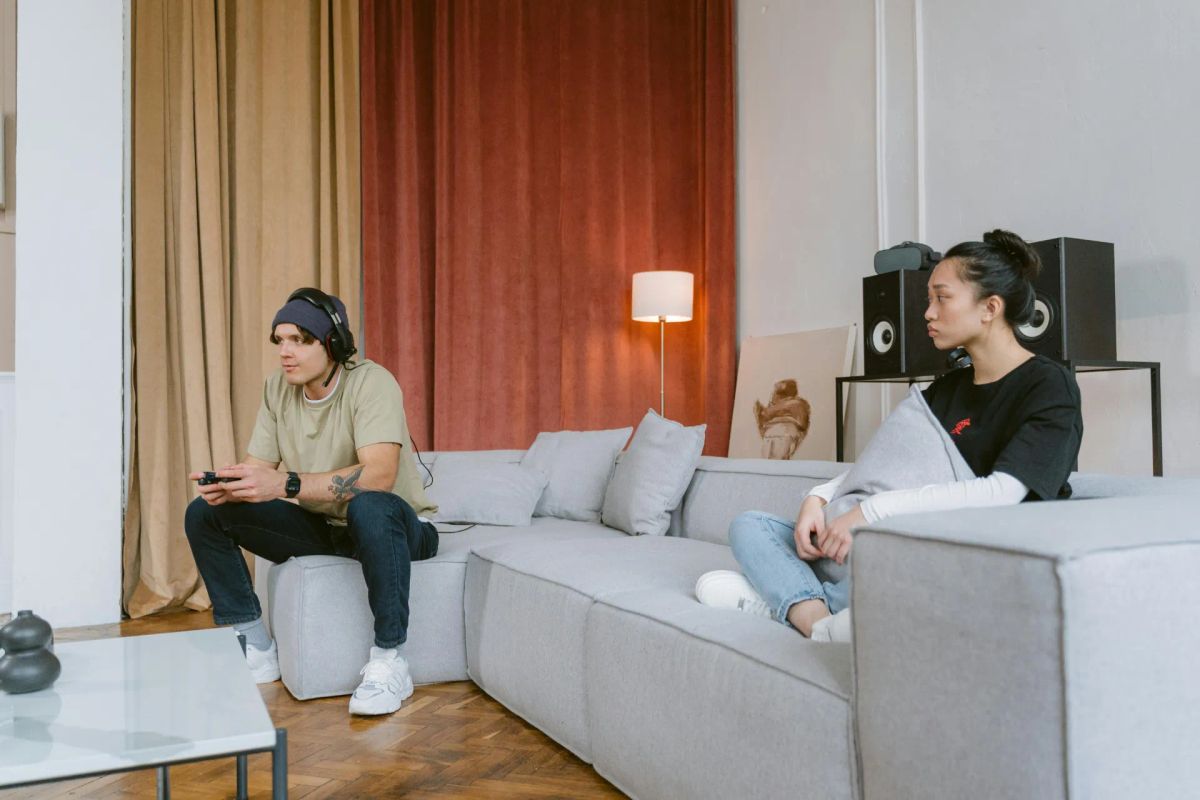
Feeling More Like Housemates Than Partners?
Most couples do not suddenly wake up feeling disconnected.
It usually happens gradually.
Life becomes busy. Work becomes demanding. Family responsibilities increase. There is always something that needs attention.
Without realising it, conversations become shorter and more practical.
You discuss who is collecting the children, what needs paying, and what is for dinner.
But the conversations that once created connection begin to disappear.
The shared laughter becomes less frequent.
The check-ins become shorter.
The feeling of being a team slowly starts to fade.
In our experience, this is one of the most common reasons couples seek support. They still care deeply about each other, but they no longer feel emotionally connected.
How Stress Creates Distance
Stress affects relationships in ways that are often difficult to recognise at first.
When people are overwhelmed, their focus naturally narrows.
Most of their emotional energy goes into simply getting through the day.
As a result, there is often very little left for the relationship.
It is not intentional.
No one decides to stop connecting with their partner.
It is usually a slow drift caused by exhaustion, pressure, and emotional overload.
Many couples find themselves in the same situation described in our article about relationship support, where they know something feels wrong but struggle to identify exactly what has changed.
When You Stop Feeling Like a Team
One of the most painful aspects of emotional distance is the loneliness it creates.
You can be sitting beside somebody every evening and still feel alone.
Many couples describe feeling as though they are living parallel lives.
They are managing a household together, but they are no longer sharing life together.
This often creates a cycle.
One partner attempts to connect.
The other is distracted, exhausted, or emotionally unavailable.
The first partner feels rejected and stops trying.
The distance grows.
Eventually, both people begin protecting themselves from disappointment by lowering their expectations.
Unfortunately, this often increases the emotional gap between them.
Why Reconnection Can Feel Difficult
Once couples become stuck in this pattern, reconnecting is rarely as simple as deciding to spend more time together.
Many people feel hurt, frustrated, or unsure how to begin.
Some worry that bringing up the issue will create conflict.
Others fear they have left it too late.
This is why many couples seek couples counselling before the distance grows further.
The aim is not to assign blame.
The aim is to understand what has happened and create opportunities for connection again.
How Relationship Counselling Can Help
In couples therapy, we often help couples recognise that the problem is not a lack of love.
More often, it is a pattern that has developed over time.
Many couples feel enormous relief once they understand that emotional distance can be changed.
A relationship therapist can help you:
- understand the cycle that is creating distance
- improve communication and emotional openness
- identify the pressures affecting the relationship
- rebuild emotional connection and trust
- work together as a team again
We also use approaches similar to those discussed in our article on improving communication in relationships, helping couples move beyond practical conversations and reconnect emotionally.
For some couples, sessions provide the first opportunity in months to slow down and properly listen to each other.
Small Ways to Reconnect
While counselling can be incredibly valuable, small changes can also help create connection.
Create Time Without Distractions
Ten minutes of uninterrupted attention is often more powerful than hours spent in the same room while distracted.
Put phones away and simply talk.
Ask Different Questions
Move beyond logistics.
Ask:
"What was the hardest part of your day?"
or
"What has been on your mind recently?"
These questions invite emotional connection rather than practical conversation.
Acknowledge the Pressure
Sometimes couples need to recognise that life has simply been difficult.
Naming the stress can help both people stop blaming themselves or each other.
Support Available Across Kent
If you feel more like housemates than partners, support is available.
We offer face-to-face and online couples counselling across Kent.
Our fee is £80 per couple for a full hour session.
Sessions are booked on a session-by-session basis, with no pressure or obligation to continue.
Feeling distant from your partner?
Browse therapists, check availability, and book your first couples counselling session online or face to face.
View therapists →Face-to-face and online sessions · Qualified therapists · Confidential
Written by Sian Jones, Founder of Relationship Counselling Kent. Sian has extensive experience helping couples rebuild emotional connection, improve communication, and strengthen their relationships.